
In today’s digital-first business environment, having an online presence is essential for businesses of all sizes. Customers use search engines, social media, websites, email, and online platforms to discover products and services, compare options, and make purchasing decisions.
This is where digital marketing services can play an important role.
Digital marketing includes a range of strategies such as search engine optimization (SEO), social media marketing, Google Ads, content marketing, email marketing, online reputation management, and conversion optimization. When these channels are planned and managed effectively, they can help businesses connect with relevant audiences and support measurable marketing objectives.
Whether you operate a startup, small business, or established enterprise, understanding the benefits of digital marketing services can help you make better decisions about your marketing strategy.
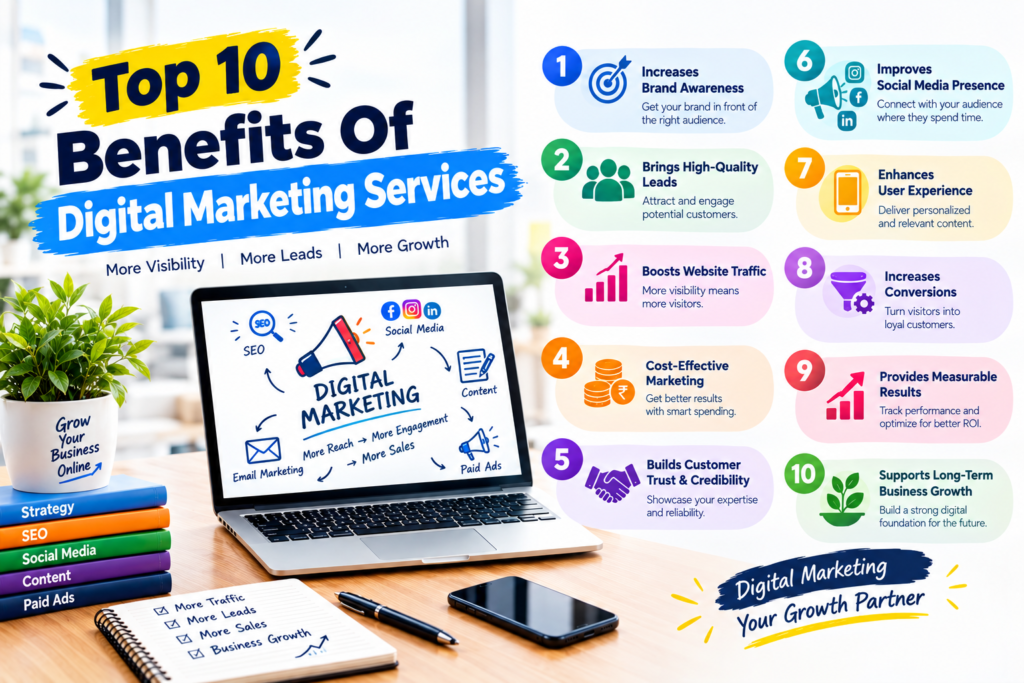
In this blog, we explore the top 10 benefits of digital marketing services and how they can support modern business growth.
What Are Digital Marketing Services?
Digital marketing services are professional marketing activities designed to promote a business, product, or service through digital channels.
Common digital marketing services include:
- Search Engine Optimization (SEO)
- Search Engine Marketing (SEM)
- Google Ads
- Social Media Marketing
- Content Marketing
- Email Marketing
- Local SEO
- Online Reputation Management
- Conversion Rate Optimization
- Analytics and Reporting
Businesses can use individual services or combine multiple channels into an integrated digital marketing strategy.
Top 10 Benefits Of Digital Marketing Services
1. Increase Online Visibility
One of the most important benefits of digital marketing services is improved online visibility.
Potential customers often search online before contacting a business or making a purchase. Digital marketing helps businesses appear in relevant places where their audiences are searching and spending time.
SEO can help improve organic search visibility, while paid advertising can provide additional exposure through targeted campaigns.
Social media and content marketing can further expand a company’s digital presence.
How It Helps
Greater visibility can help more potential customers discover your brand, website, products, and services.
For startups and growing businesses, building online visibility can be particularly important when competing against established companies.
2. Reach Your Target Audience
Traditional marketing can sometimes make it difficult to precisely identify who is seeing an advertisement.
Digital marketing provides businesses with more opportunities to define and reach specific audience segments.
Depending on the platform and campaign, businesses can target audiences based on factors such as:
- Location
- Interests
- Search behavior
- Demographics
- Professional characteristics
- Website interactions
- Previous engagement
For example, a local service provider can focus its marketing efforts on customers within a particular geographic area.
This targeted approach can make marketing campaigns more relevant and efficient.
3. Generate More Qualified Leads
Digital marketing can help businesses attract people who are already interested in their products or services.
For example, someone searching for “SEO services for startups” may already have a specific business need.
Similarly, businesses can use social media advertising, landing pages, content marketing, and search advertising to attract potential customers.
A well-designed digital marketing funnel can guide prospects through stages such as:
Awareness → Interest → Consideration → Conversion
Businesses can then use forms, calls, messages, email campaigns, or website actions to turn interested visitors into leads.
4. Cost-Effective Marketing Opportunities
Another major benefit of digital marketing services is the variety of options available for different budgets.
Businesses can choose from organic and paid strategies depending on their goals and resources.
For example:
- SEO can support long-term organic visibility.
- Content marketing can attract and educate audiences.
- Social media can build engagement and awareness.
- Paid advertising can provide targeted reach.
- Email marketing can support customer retention.
Digital marketing does not automatically mean low-cost marketing. Effective campaigns still require investment in strategy, technology, content, advertising, and skilled professionals.
However, digital channels provide businesses with greater opportunities to control budgets and measure performance.
5. Measurable Marketing Results
Traditional marketing can sometimes make it difficult to determine exactly how many people interacted with an advertisement.
Digital marketing provides extensive performance data.
Businesses can track metrics such as:
- Website traffic
- Leads
- Conversions
- Click-through rate
- Cost per lead
- Customer acquisition cost
- Search impressions
- Engagement
- Advertising performance
This data allows marketers to understand what is working and where improvements may be required.
Instead of relying entirely on assumptions, businesses can use performance information to make more informed marketing decisions.
6. Build Strong Brand Awareness
Building a recognizable brand takes time and consistent communication.
Digital marketing allows businesses to communicate with potential customers across multiple online channels.
A company can use:
- Social media content
- Blog articles
- Videos
- Email newsletters
- Search campaigns
- Educational resources
- Online communities
Consistent messaging and useful content can help audiences become familiar with a brand.
For startups, this can be particularly useful because digital channels provide opportunities to introduce a new company to relevant audiences.
7. Improve Customer Engagement
Digital marketing is not only about promoting products and services. It also provides opportunities for businesses to interact directly with customers.
Social media comments, direct messages, email, online reviews, and website forms can create communication channels between businesses and their audiences.
Businesses can use these interactions to:
- Answer questions
- Provide support
- Collect feedback
- Understand customer needs
- Share useful information
- Build relationships
Customer engagement can become an important part of building long-term brand relationships.
8. Compete With Larger Businesses
Digital marketing can provide smaller businesses and startups with opportunities to compete for online attention.
A smaller company may not have the same resources as a large enterprise, but it can develop specialized content, target specific audiences, focus on local SEO, and build expertise within a particular niche.
For example, instead of trying to compete for an extremely broad keyword, a startup could focus on a more specific search topic that closely matches its services and audience.
A focused digital strategy can help businesses identify opportunities within their market.
9. Personalize Customer Experiences
Modern customers often expect businesses to provide relevant information rather than generic messages.
Digital marketing allows businesses to segment audiences and customize communication based on customer interests and interactions.
For example, an email campaign can provide different messages to:
- New leads
- Existing customers
- Returning customers
- Customers interested in specific products
- Customers who have previously interacted with certain content
Personalization can make marketing communication more relevant.
Businesses should always use customer information responsibly and follow applicable privacy and data protection requirements.
10. Support Long-Term Business Growth
Perhaps one of the biggest benefits of digital marketing services is their ability to support multiple stages of the customer journey.
A business can use digital marketing to:
Attract → Engage → Convert → Retain
SEO and content can attract visitors.
Social media can build engagement.
Paid advertising and landing pages can support lead generation.
Email marketing and customer communication can support retention.
Analytics can help businesses measure performance and continuously improve their strategy.
When these activities work together, digital marketing can become an important part of a broader business growth plan.
Digital Marketing Services Businesses Can Use
Different businesses require different strategies. Some of the most common digital marketing services include:
SEO Services
SEO helps businesses improve their visibility in organic search results through content, technical optimization, on-page SEO, and authority-building activities.
Social Media Marketing
Social media marketing helps businesses build awareness, engagement, community, and leads through relevant social platforms.
Google Ads
Google Ads can help businesses reach people searching for relevant products and services through paid search and other advertising formats.
Content Marketing
Content marketing involves creating useful articles, videos, guides, case studies, and other resources that provide value to target audiences.
Email Marketing
Email marketing can help businesses communicate with leads and existing customers through targeted campaigns and ongoing communication.
How To Choose The Right Digital Marketing Services
Not every business needs every digital marketing channel.
Before choosing a service, consider:
1. Your Business Goals
Determine whether you want to increase brand awareness, generate leads, increase sales, improve organic traffic, or retain customers.
2. Your Target Audience
Understand where your customers search for information and which digital channels they use.
3. Your Budget
Choose strategies that can be maintained consistently within your available marketing budget.
4. Your Industry
Competition, customer behavior, and marketing opportunities can vary significantly between industries.
5. Your Measurement Strategy
Define the KPIs you will use to determine whether your marketing activities are achieving their objectives.
Why Businesses Should Use an Integrated Digital Marketing Strategy
Using individual marketing channels can be useful, but integrating multiple channels can create a more consistent customer journey.
For example:
SEO + Content Marketing + Social Media + Paid Advertising + Email Marketing
can work together to attract visitors, educate prospects, generate leads, and maintain customer relationships.
The right combination depends on your business model and objectives.